Call Us Now : 08045478995
|
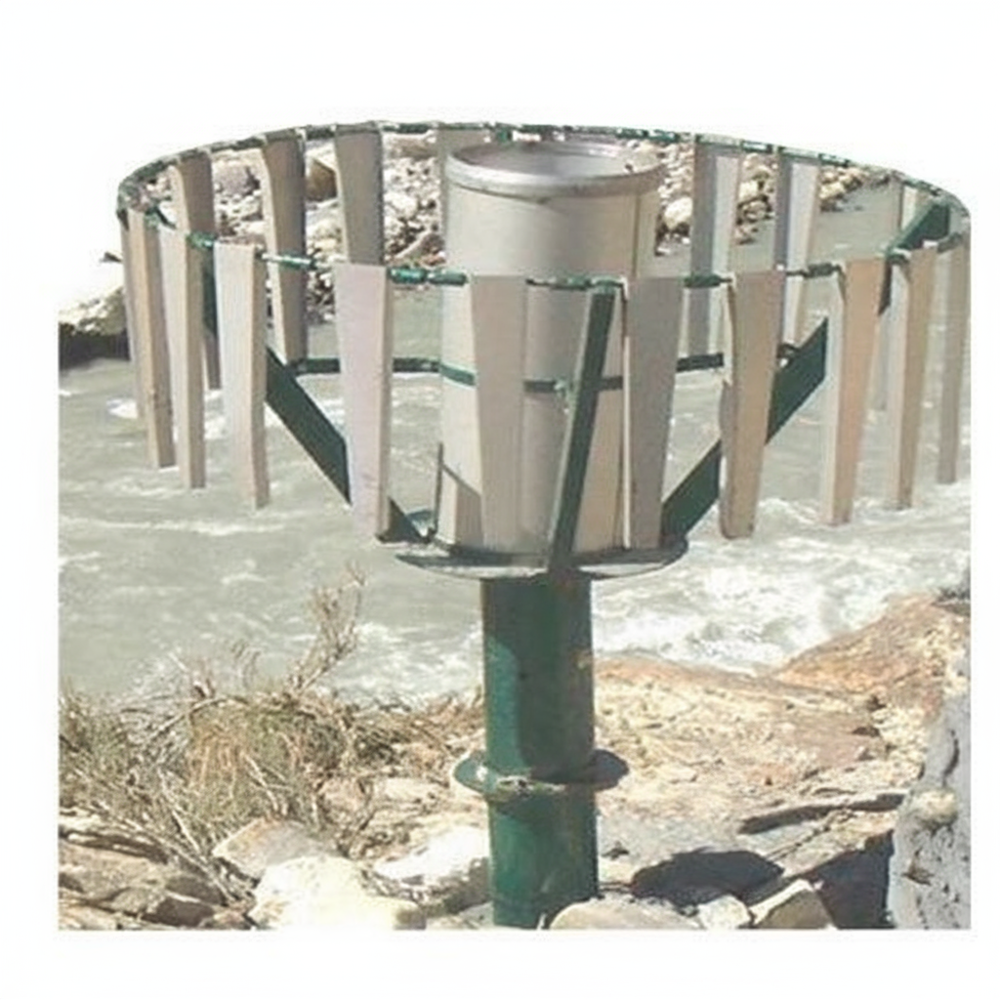
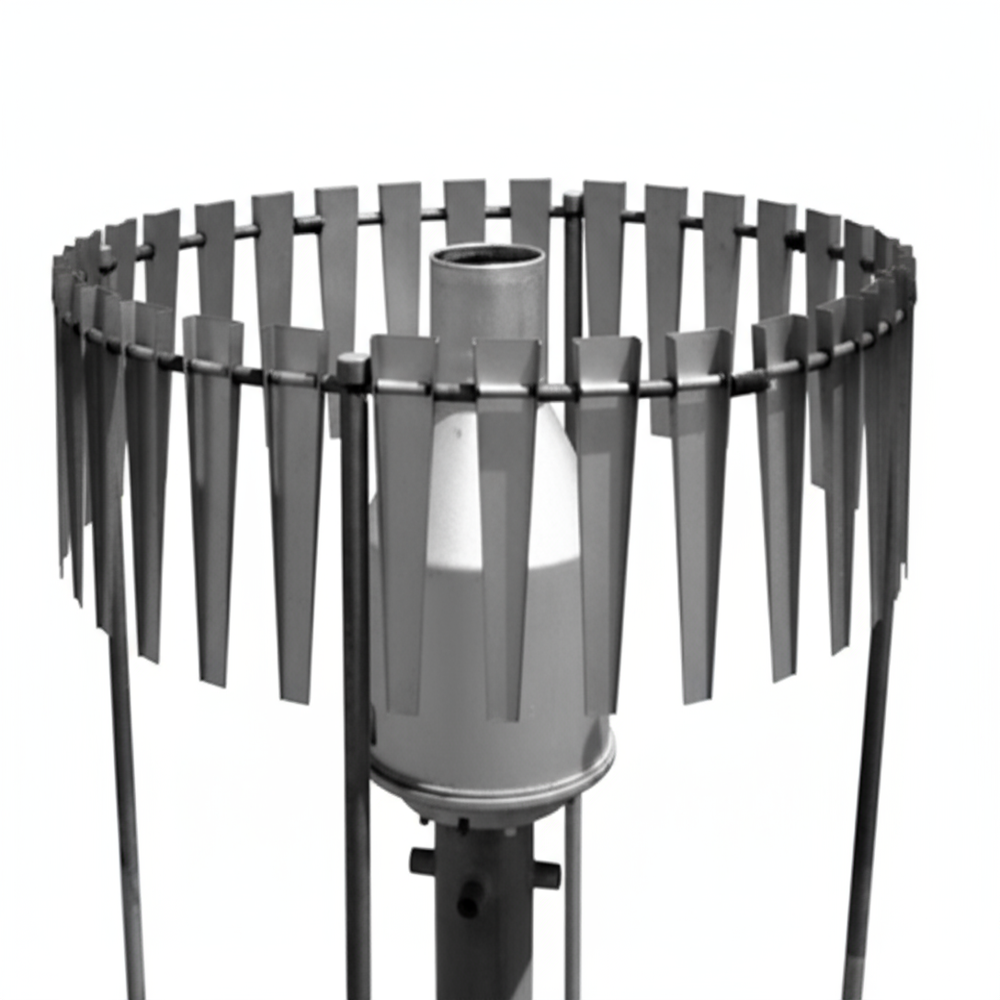
Snow water is measured by accurately collecting snowfall amounts and analyzing the snow that has been meltedusually in a glycol mixture. The problem with current snow measurement techniques is that with almost any wind, collection efficiency is questionable, leading to large uncertainties in estimates of pollutant concentration. Most current combinations of windshields and gauges are ineffective, requiring the gauges to be maintained and monitored frequently.
Snow gauges range from rudimentary buckets to ultrasonic depth sensors. Heated buckets that tipped to pour out water were once the most prevalent gauge, but they were inaccurate. These gauges were developed to collect rainfall before being modified for snow. They never performed well. A heating element was added to the gauge to melt the snow, but evaporation loss became a major factor. Catch efficiency for a heated tipping bucket averages only 35 percent for frozen precipitation.
Most modern gauges now contain a glycol solution or antifreeze topped with a thin film of low-viscosity oil. The glycol solution melts the snow and the oil reduces evaporation loss. The water measurements are taken manually or transmitted by radio signal, depending on the sophistication of the particular gauge. Although many manufacturers produce these gauges (ETI, Belfort, Campbell, and others), meteorologists in Canada and the United States are leaning toward the Geonor precipitation gauge.
The Geonor vibrating-wire precipitation gauge uses a bucket suspended by wires. Glycol solution is in the bucket. As snow falls and melts in the glycol solution, the mass increases. The wires stretch and begin to vibrate, producing an electromagnetic field that is picked up by the buckets sensor. The strength of the electromagnetic field depends on the mass in the bucket, allowing the contents to be measured accurately.
An Alter shield is a ring of vertically oriented slats with a radius of about 0.5 meter. Gauges equipped with Alter shields rely heavily on proper site placement to reduce the effects of wind. The catch efficiency for a Geonor gauge surrounded by an Alter shield drops to around 60 percent of the DFIR with winds of 5 meters per second, but falls to 15 to 20 percent of the DFIR with winds of 8 meters per second.
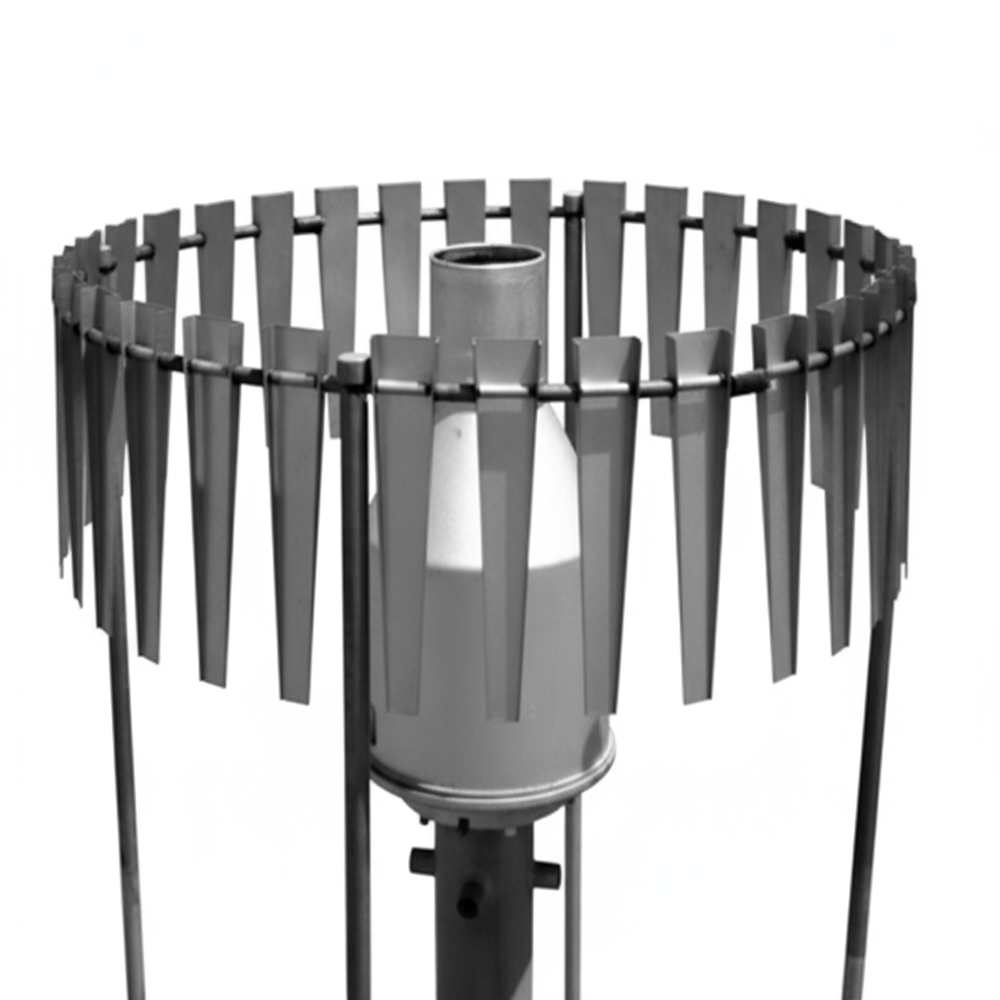
A double Alter shield was tested at the Marshall Field site. The double Alter shield (figure 3) has another ring of vertically oriented slats 0.5 meter from the inner ring. This system offers a significant improvement over the single Alter shield. Catch efficiency for a Geonor gauge within a double Alter shield is over 85 percent of the DFIR for windspeeds as high as 6 meters per second and may be as much as 80 percent of the DFIR for windspeeds of 10 meters per second.
Site selection is a major factor in the effectiveness of a precipitation gauge. Most remote weather stations must be exposed to the elements, so the precipitation gauge must be exposed to wind. One potential solution is to separate the precipitation gauge from the weather station so a more sheltered site can be selected for the precipitation gauge. This technique can be costly, but if the precipitation gauge is properly sited, measurements can be much more accurate.
A precipitation gauge should be placed in a level, open clearing in the trees. No vegetation should be above the level of the gauge. The distance of the gauge to the trees should roughly equal the height of the trees. In other words, an angle of roughly 40 to 45 degrees from the gauges orifice to the tops of the surrounding trees is ideal.
Product details
|
Actual Gauge Height |
1.5 m (4 ft 11 in) |
|
Container Length |
51.5 cm (201/4 in) |
|
Product Type |
Digital Gauge |
|
Operating Temperature |
- 40 to 75 Degree C. |
|
Brand |
Lakshmi Engg. Works |
|
Material |
Mild Steel |

Price:
 |
LAKSHMI ENGINEERING WORKS
All Rights Reserved.(Terms of Use) Developed and Managed by Infocom Network Private Limited. |



 Send Inquiry

 Send Inquiry
 Send SMS
 Call Me Free
 Send Inquiry